


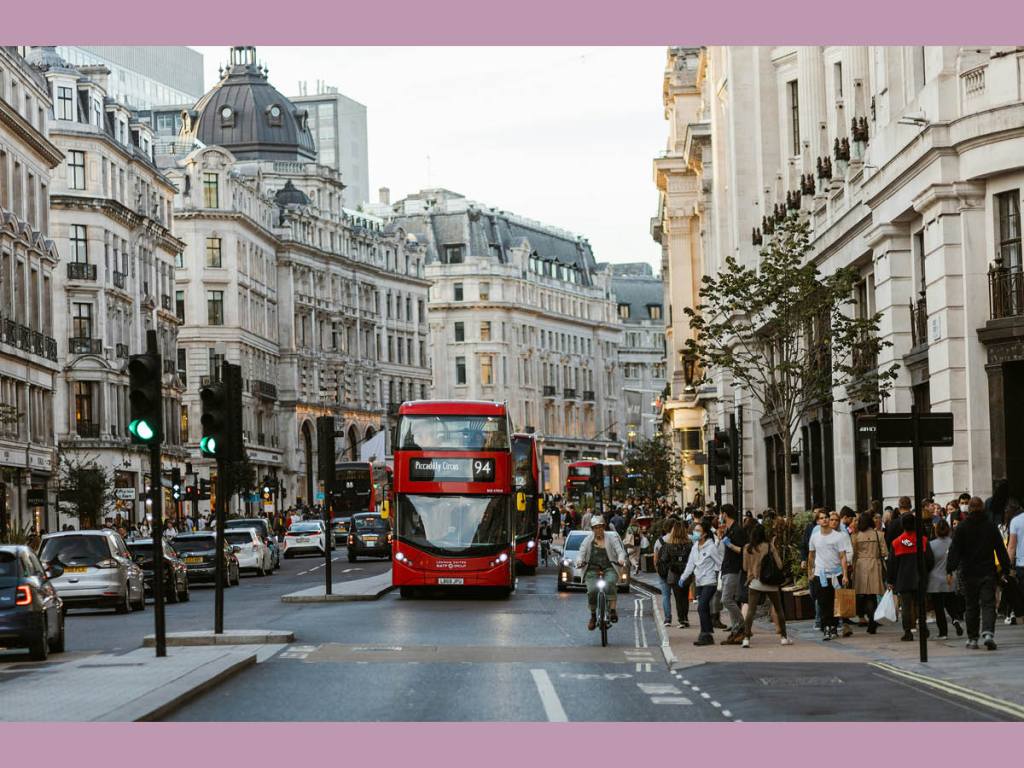
OTHER CITIES: LONDON MEMORYSCAPE
Afterword
by Zoltán Kékesi
15 January 2026
With this final contribution, the series ‘Other Cities: London Memoryscape’ is coming to an end. Nine pieces have been brought into conversation over the last year, all of them written by IAS fellows and associates who, from the perspective of their respective research, thought about London and how our memories – often of other cities – influence our relationship to the city, our experience of it and maybe even the city itself. Here, series editor and IAS Research Fellow Zoltán Kékesi looks back on a year of pondering and writing about London’s memoryscape.
We all have our own version of the cities we live or lived in – a landscape filled with personal memories, recent and more lived-in. Yet, alongside having our own version, knowing a place is learning how others experienced it before us.
I was thinking about this when reading Colson Whitehead’s The Colossus of New York, a tribute to his home city: “You start building your private New York the first time you lay eyes on it. Maybe you were in a cab leaving the airport when the skyline first roused itself into view. […] Freeze it there: that instant is the first brick in your city.” Yet what makes Whitehead such a masterful chronicler of his city is his ability to write the past experiences of a multitude of dwellers.
I remember that ‘first brick’ in my own ‘private’ London: I was dragging an oversized suitcase from Victoria station to the Piccadilly line, feeling foreign and disoriented. Indeed, the fact that I had moved to London with few memories of my own of the city, and wanted to learn about others’, was one inspiration for this series Other Cities: London Memoryscape.
The title refers to London as a city of multitudes as well as a place where memories of other places converge. The nine contributions that came together interrogate cultural, social and temporal diversities, and testify to continued interest in the relationship between urban spaces and the political and ethical considerations related to remembering multiple pasts. They represent varied practices of researching and writing, and respond to a range of relevant issues: cultural heritage and urban memory; multi-locality and multiple belonging (and non-belonging); migration and diasporic memories; mapping urban memories through spatial and visual representation; narrating the city in literature and the arts; the psychogeography and palimpsests of pasts and present; and more. Published between December 2024 and December 2025, they resonate with each other in various ways.
In ‘Memory Multiplied: Personal Literary Associations’, Fuhito Endo reflects on his three visits to London, each of which took place ten years apart, and the ways in which his own memory of the place works, through the reading of Virginia Woolf and Kazuo Ishiguro, while contemplating the notion that “memories are stored and accumulated in an archaeological or geological manner.”
For ‘Buried in Plain Sight: Pandemic, Poverty, and Slavery at St Giles-in-the-Fields’, Margaret Comer visited St Giles church in Soho to explore accumulated memories which, surprisingly, transported her back to her native Baltimore and raised the fundamental question “who is remembered and mourned?” in the public space.
In ‘Echoes: London, Buenos Aires and Misiones in Mariana Enríquez’s Our Share of Night’, Virginia Vecchioli and I join Fuhito’s meditations on a past that “never disappears but exists simultaneously” and Margaret’s concerns around the legacies of violence. Enriquez’s transatlantic novel connected the memory of colonialism and the last military dictatorship in Argentina, and mirrored our own trajectory in an uncanny way. Reading the novel against the geographies of London, Buenos Aires and Misiones Province allowed us to gain a deeper understanding of the places where we live or have lived and conducted research.
In her multimedia essay ‘Of Media, Multiplicities and Monsters: Mapping European Literary London’, Uta Staiger contemplates the polyphonic experience of visiting or exiled writers across eras. In a rich combination of text, photomontage and sound, she opens up ways to read the European Literary Map of London, a multilingual online map developed at UCL, and encourages us to listen to the city around us.
London has long been remembered as a place of refuge from Nazism. In my conversation with Stephanie Bird, Mary Fulbrook and Stefanie Rauch, we look closely at an interview from the oral history collection Final Account: Third Reich Testimonies in UCL’s Digital Collections, and discuss the case of a former member of the Nazi League of German Girls who visited the city on the eve of the Second World War and reminisces about the ways in which the city changed her.
Similarly to Uta’s piece, listening is at the centre of ‘Storied Walks and Deep Mappings of South London’, a personal report by Alice-Anne Psaltis on her practice of urban exploration. She applies a methodology that draws on Indigenous American notions of place to her public walks, a practice centred on slowness and attention to the “historical and material landscape, its human and more-than-human residents.”
“Whose memory is this?” asks Saba Zavarei in her ‘Concrete Memories: On Exile and the City’ vis-á-vis an image of the Israeli bombing of her native Tehran, a question that considers the collective nature of experiencing place. Through two scenes of superimposed realities of London and Tehran, she revisits the concrete architecture of her childhood in a moment of distance and danger and re-inscribes it into the concrete surface of London’s Barbican.
In her bilingual essay/film Spores/Esporas, Verónica Posada Álvarez tells the story of a Latin American woman in London and intertwines personal journey, dream and archival work. Similarly to Saba, she points to the visible and invisible interconnectedness of the Global North and South by relating her own experience of migration and exploring the history of the Latin American diaspora around Elephant and Castle, the “creation of a home made of otherness.”
Walking down the streets of London now, whether it is Bloomsbury, the Barbican, Elephant and Castle, or elsewhere, I remember the insights and experiences collected and generously shared in these contributions, and I hope they will accompany the walks of readers as well. Moreover, what I learnt is a variety of ways to relate and connect to a shared place through walking, writing, reading, visualising and more, and to think about connections, visible and less visible, to places elsewhere.
Ultimately, these ‘think pieces’ testify to the multitude of points of view, disciplinary and otherwise, migratory experiences, and personal trajectories that IAS brings to UCL – and to London.
ZOLTÁN KÉKESI is Research Fellow at the Centre for Collective Violence, Holocaust and Genocide Studies at the UCL Institute of Advanced Studies. His work is generously supported by the Pears Foundation.
***
Edited by MARTHE LISSON
Proofreading by CATHERINE STOKES
Lead image (detail) © Jacob Smith via Unsplash
Categories