The First Page: Time and Power in Azraq Refugee Camp
THE FIRST PAGE
Time and Power in Azraq Refugee Camp
by Melissa Gatter
3 February 2025
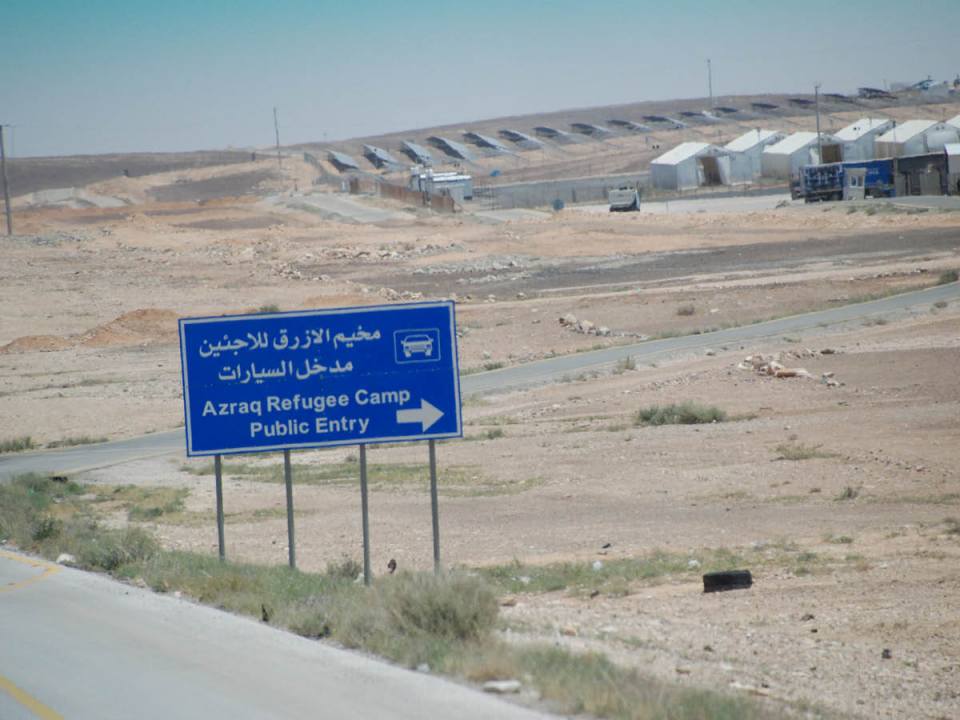
The First Page presents the first page of books that are launched as part of the IAS Book Launch Programme. On 13 February 2025, Melissa Gatter presents her book Time and Power in Azraq Refugee Camp. A Nine-to-Five Emergency. Azraq is one of two official humanitarian refugee camps for Syrian refugees in Jordan and hosts forty thousand people. Gatter challenges the perceptions of Azraq as the ‘ideal’ refugee camp, arguing that it operates as a ‘nine-to-five emergency’ where mundane bureaucratic procedures serve to sustain a power system that is meant to aid refugees but in reality suppresses, foreclosing futures that it is supposed to preserve.
Introduction
Why Time?
The camp is time and time is the camp.
Yousif Qasmiyeh, “The Camp Is Time” (2017)
In a caravan some ninety kilometers south of the Syrian border, Fadwa knelt on her prayer mat. I chatted with her colleague, who, like Fadwa, lived in Village 3 and worked at the nongovernmental organization (NGO) center, where we had positioned ourselves directly under an air-conditioning unit. We spoke quietly, mindful of the children who were sleeping in this room that served as a nursery and of Fadwa, who at this moment was finishing her prayers. “As-salamu ‘alaykum, as-salamu ‘alaykum,” she whispered softly as she looked over each shoulder. She sat still a moment and then turned to join our conversation.
“So what topic are you researching here in Azraq?” she asked excitedly, and I gave her the usual response, that generally I am interested in time, how it passes and how it is experienced by people who live and who work in the camp.
“There is no time in the camp [ma fi wa’t bil-mukhayyam]!” Fadwa responded. “Our schedules are so full, we are busy all the time.”
“It’s a good thing you are busy, no?” I asked, remembering how others in the camp loathed the idea of sitting at home in their caravan with nothing to do.
“No, it’s not better!” both Fadwa and her colleague remarked in unison. Fadwa continued, “We feel pressure [daght] all the time, we don’t have time to rest, we don’t have time to give our minds a break [ma fi ‘andna wa’t mnurtah, ma fi wa’t mnurayyih balna].”
I would quickly come to realize from speaking with others like Fadwa just how loaded the concept of time is for Syrians living in Jordan’s Azraq camp. What did Fadwa mean when she stated that “there is no time in the camp”? She related “clock time”—for her, a daily schedule filled with work, chores, and childrearing—to an abstract concept of time that does not allow for a break from camp life. To say that “there is no time in the camp” not only conveys a sense of busyness in the everyday but could also portray a feeling of isolation from “outside” or “national” time. Time as Fadwa may have experienced it in her hometown of
Quriyateyn, Homs, before the war does not exist within Azraq’s borders.
Several kilometers to the south in Village 5, Nour, a spirited Aleppan woman, directed an NGO center. Nour loved her job, where she was in charge of the residents employed at the…
MELISSA GATTER is a lecturer in International Development at the University of Sussex, researching forced migration, aid, and time in the Middle East. She received her PhD from the University of Cambridge in 2020. She has also worked for leading aid agencies in Jordan, including Save the Children.
The book launch will take place on 13 February 2025 at the Institute of Advanced Studies. More information.
Lead Image: Camp de réfugiés syriens d’Azrac by Philweb via Wikicommons
Categories