Rivering Vernaculars

SERIES
Rivering Vernaculars:
Text and Time on the Ouse
by Rebecca Drake
11 September 2025
What is a river?
More than just a body of water, Rebecca Drake explores the peculiar and shifting temporality of rivers, the ways in which they blend past, present, and future. Thinking poetically through her engagement with water, Drake suggests that we might usefully understand the practice of ‘rivering’ as gathering text from multiple sources and collecting together into a singular body.
THE POEM
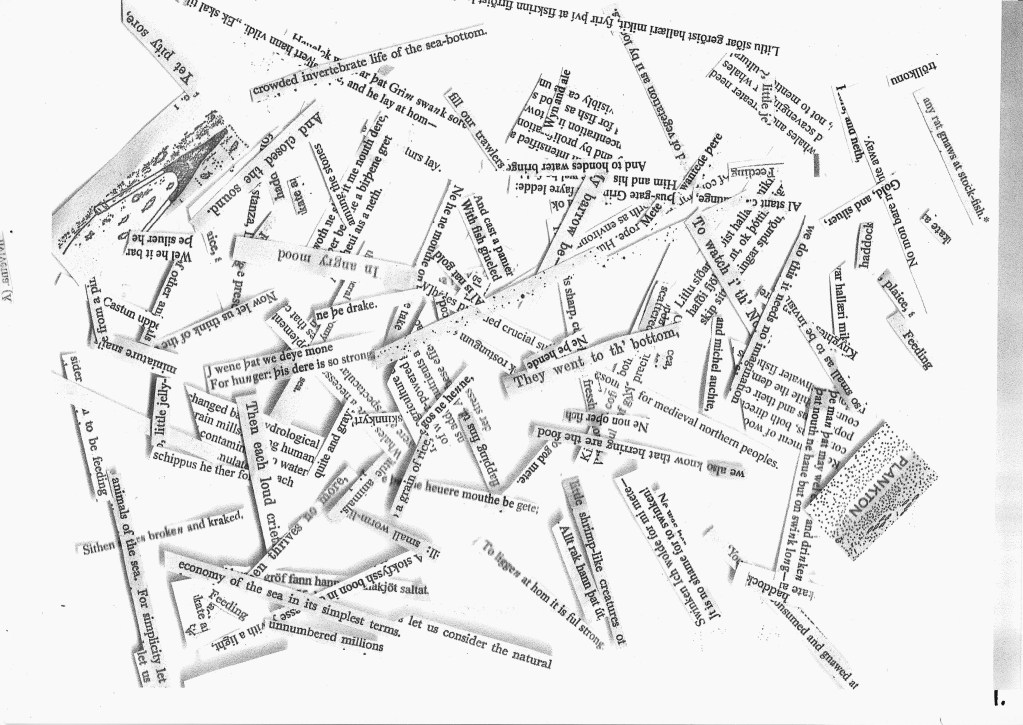
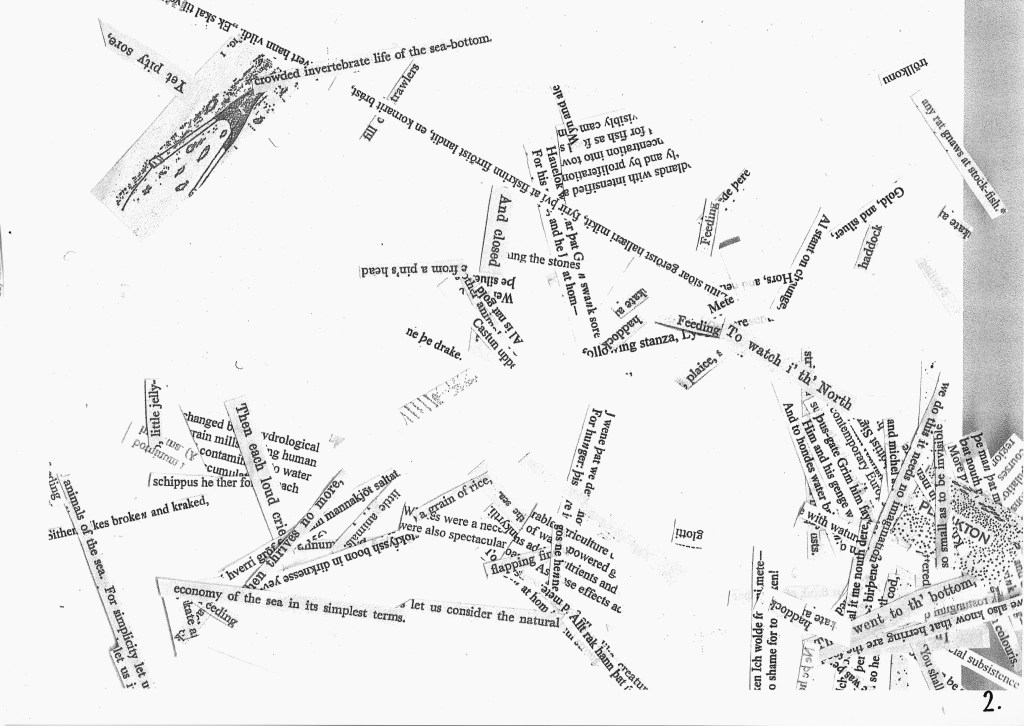


COMMENTARY
If a river had a vernacular, what would it be? A river is not just a river, a water way, a bi-directional flow of water from source to sea. In the same way that the sea is not made of water, but is made of a thousand interconnected and entangled parts1, a river is not made of water but is made of silt, histories, and passing narratives. The silt of a river contains particles of every thing that has ever passed through and along it; so a river is a bi-directional body of past and present, or medieval and present day.
The theme of this poem is hunger. It is an exploration of famine past, present, and future driven by poor use of natural resources and climate crisis, drawing on textual representations of adjacent environmental crises and foodsource relations in medieval literature. Famine or dearth of resources drives the narratives of Havelok the Dane and Ketils saga hœngs (The Saga of Ketill Salmon). Scarcity and want settle into the narrative bones of Emaré and Fríðþjófs saga ins frækna (The Saga of Fríðþjóf the Bold). Hunger (not always for food) lurks in The Book of Margery Kempe and Lydgate’s Like a Midsummer Rose. How does the river remember hunger? How does it remember need, desire, want, and scarcity? Through vernacular literary memory, this piece invites a meditation on how we are connected to environmental pasts, presents, and futures through our own wants, needs, and daily experiences of the circular impacts of and movements of environmental change.
When I talk about ‘rivering’ I mean the act of gathering text from multiple sources and collecting it in a composite body, or landscape. A landscape can be understood as a collection of material and immaterial objects in which “an actant never really acts alone”2 but “depends on the collaboration, cooperation, or interactive interference of many bodies and forces”3. Maggie Roe has written of landscape that “remnants of lives in the built environment are found as material ruins or traces and fragments”4. In the poem ‘Text and Time on the Ouse’, I ask of the River Ouse in York what these fragments might be and how they might collaborate, cooperate and interact. Rose Ferraby and Rob St John have described histories of the River Ouse in terms of silt. “Soft silt holds disintegrated quaysides, the cargoes of boats, bits and pieces lost but held safe in this soft nook of the city”.5 A vernacular of river might also resemble this particulate – perhaps we might say ‘granular’ – silting.
In this poem, I river textual fragments from the vernaculars of Middle English, Old Norse-Icelandic, and Modern English. I gather these textual fragments from the late-medieval popular romances of England (Emaré and Havelok the Dane) and Iceland (Friðþíofs saga ins frækna and Ketils saga hængs), late-medieval English lyrics (John Lydgate), and psuedo hagiographies (The Book of Margery Kempe). Each of these texts represents experiences of living with or alongside bodies of water, whether tangentially as in Lydgate’s profound imagery of a stockfish bone glowing in the dark (‘Al is nat gold that outward shewith bright; / A stokfyssh boon in dirknesse yevith a light’), or directly as in Havelok the Dane’s long list of fish species historically likely to have been fished and eaten in Yorkshire and the Humber.
Our understanding of the Ouse today (its body in York) is of a river that is more often than not a highway of urban holiday making and recreation, but in the later Middle Ages it connected York to the Humber and the East Coast ports in European maritime trade. There is significant evidence suggesting East Coast connections with Iceland via this trade; I have rivered Middle English and Old Norse-Icelandic vernacular texts as poetic reinvention of these trade interconnections between England and Iceland in the later Middle Ages. York, known to the Old Norse as ‘Jorvik’, has of course a long history of Scandinavian influence in the ninth to tenth centuries. I gather here from later Norse texts, two fornaldarsögur or so-called ‘legendary sagas’ dating to the thirteenth century. These are two sagas engaging with the sea – fishing it, exploring it, living with it – and at least written down simultaneously with the Anglo-Icelandic stockfish trade of the fourteenth and fifteenth centuries.
In addition to these medieval texts, I gather fragments from a modern science textbook – The Open Sea – on the topic of plankton as a way of illustrating the environmental ecologies that underpin a particulate view of the river. Of plankton, marine biologist Sir Alistair Hardy has written,
All these creatures, both animals and plants, which float and drift with the flow of tides and ocean currents are called by the general name of plankton. It is one of the most expressive technical terms used in science and is taken directly from the Greek πλαγκτον. It is often translated as if it meant just ‘wandering’, but really the Greek is more subtle than this and tells us in one word what we in English have to say in several; it has a distinctly passive sense meaning ‘that which is made to wander or drift’, i.e. drifting beyond its own control – unable to stop if it wanted to.6
Plankton/particulates are a wandering thing, moving in circular motion subject to outside control. Plankton aligns with a theory of ‘tidalectics’ described by the Barbadian scholar-poet Kamau Braithwaite. ‘Tidalectics’ follow a circular motion of entangled particles in water mixing up, overlapping, circling out from a middle and back in again. In Brathwaite’s own expression of his theory – a theory initially put forward to ask ‘What is the origin of the Caribbean? How do we come from? Where do we come from?’ – ‘tidalectics’ is not,
dialectical – in the way that Western philosophy has assumed people’s lives should be,
but tidalectic, like our grandmother’s – our nanna’s – action, like the movement of the ocean she’s walking on , coming from one continent/continuum, touching another, and then receding (‘reading’) from the island(s) into the perhaps creative chaos of the(ir) future…7
In addition, Elizabeth DeLoughrey, Professor of English at the University of California, understands ‘tidalectics’ as, “engaging what Brathwaite calls an ‘alter/native’ historiography to linear models of colonial progress. This ‘tidal dialectic’ resists the synthesizing telos of Hegel’s dialectic by drawing from a cyclical model, invoking the continual movement of and rhythm of the ocean”.8 ‘Tidalectics’ allow us to read the multiple vernaculars of river; river does not go from source to sea, but it moves in circular motion. In this way, river is also sea, it is backwards and forwards, up and under, and it is also past and present allowing us to understand a future environment of river.
How might the river change in the years ahead? Via gathered medieval text and present-day interaction of the poet’s hand, this poem looks simultaneously to the medieval past and the present day to seek an understanding of the river’s future. York experiences frequent floods which every year alter the landscape of the river and the city as a site that will not settle. Amongst this continuing (and increasing) change of riverine landscape, how might recognising fragments of contemporary human existence in fragments of the medieval past help us to reconcile a fluid future?
I conclude with a brief note on the physical composition of the poem.
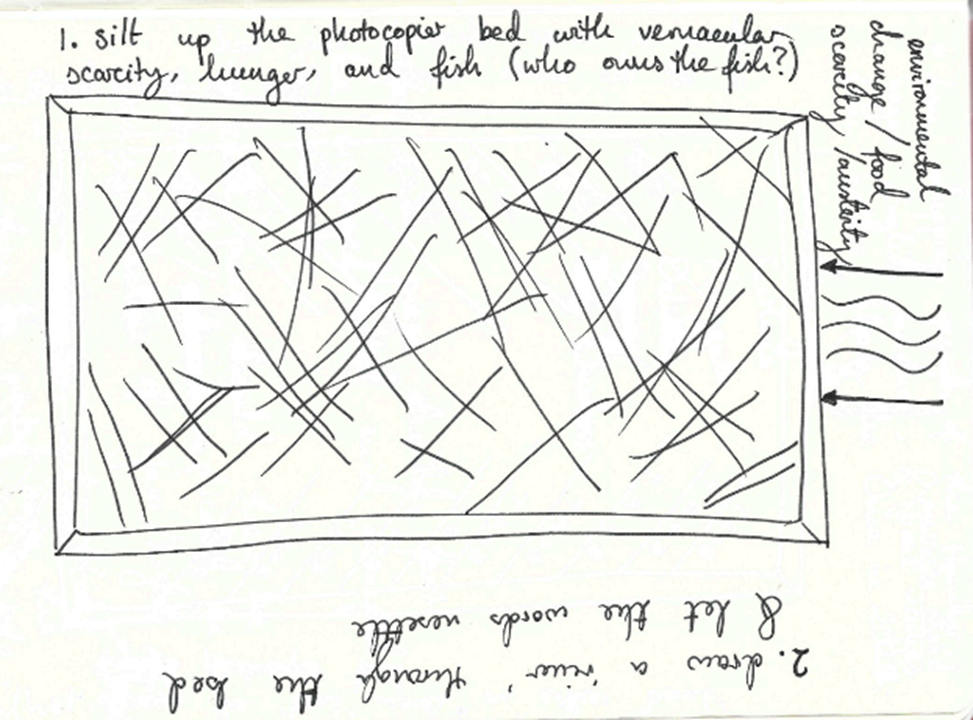
Instructions for rivering the vernacular
The texts are particulated using scissors, cutting sometimes at the outer edges of a word, sometimes at the inner edges of individual syllables, phonemes, letters. How then might these particles of text overlap? One way is to cast them on the surface of a photocopier bed (think of the ways in which this piece of glass, above an ink-fed machine, poised to overspill words and images, resembles the reflective surface of a river) and to let them fall and silt up. From this middle, from this heap of textual parts, the rivered text grows and overspills its banks. An overspilling suggests a disturbance of water – a current with some source, perhaps a cruise boat passing along the river, perhaps a single sculled canoe, perhaps a riffling waterfowl. In textual representation, where should this disturbance come from? Laid into the surface of the river is the contemporary hand – my hand, the hand of the poet-critic. The disturbance is the motion of the poet’s hand pulled through the text silt, an action that makes of the hand a fluid body, a human current disturbing the physical environment of the composite text.
ADDITIONAL WORKS THAT WERE CONSULTED
Alaimo, Stacy. “States of Suspension: Trans-corporeality at Sea”. ISLE 19.3 (2012): 476-493.
“Emaré”. Six Middle English Romances, edited by Maldwyn Mills. London: J. M. Dent & Sons, 1973.
“Frithiof the Bold”. Viking Tales of the North, translated by Rasmus B. Anderson. Chicago: Scott,
Foresman and Company, 1901.
Havelok the Dane, edited by G. V. Smithers. Clarendon Press: Oxford, 1987.
“Ketils saga hœngs”. Fornaldarsögur Norðurlanda II, edited by Gúðni Jónsson. Reykjavík:
Íslendinganaútgáfan, 1956.
Steve Mentz, An Introduction to the Blue Humanities, London: Taylor & Francis, 2023.
Vicky Szabo, Monstrous Fishes and the Mead Dark Sea, London: Brill, 2008.
The Book of Margery Kempe, translated by Anthony Bale. Oxford: Oxford University Press, 2015.
The Minor Poems of John Lydgate. Vol.2, edited by Henry Noble MacCracken. London: Early English
Text Society, 1934; rpt. 1961.
REBECCA DRAKE is a poet and researcher based at the University of York, where she completed her PhD titled ‘Living with the Sea in Late-medieval English and Icelandic Romance’ in 2023. Her most recent book of poetry is Unstill Landscapes (Guillemot Press, 2025), which was a BBC Radio 4 Poetry Extra Book of the Month.
***
Edited by ABIGAIL BLEACH, CYDNEY PHILLIP and MARTHE LISSON
Proofread by NICHOLAS LACKENBY
Lead image (detail) by Karsten Winegeart.
All other images © Rebecca Drake.
Categories