


OTHER CITIES: LONDON MEMORYSCAPE
Echoes: London, Buenos Aires and Misiones
in Mariana Enríquez’s Our Share of Night
by Zoltán Kékesi and Virginia Vecchioli
13 February 2025
In early 2024, Zoltán Kékesi and Virginia Vecchioli embarked on a research project on the memories of past violence in Argentina and Central Europe, which led them to conduct interviews in Buenos Aires and Misiones, a region in the country’s northern periphery some 1300 km from the capital and known for its history of migration from Central Europe. While they were unravelling the meaning of the stories people shared with them and the places they travelled through, literary references began to creep into daily conversations. In this essay, they reflect on how their research, personal memories, and fiction intertwined, allowing a deeper understanding of the places where they lived and conducted fieldwork. In an uncanny way, the locations of Mariana Enríquez’s 2019 novel, Our Share of Night, mirror the stations of their trajectory, binding together – emotionally and intellectually – London, Buenos Aires, and Misiones. Through researching, travelling, and reading, violence emerged as a constant presence in geographies so dissimilar, yet interconnected
in subtle ways.
Starting at Sloane Square, I walked to the Thames, searching for a house located on Cheyne Walk that overlooks the river. I had recently returned from Argentina, and I was reading Our Share of Night which recalled memories of my trip and sent me on a walk to find the “house in Chelsea.” Coming from – and working on – Central Europe, my research trip to Argentina, my conversations with Virginia, and my reading of Enríquez helped me connect to and connect worlds so different from my own.
In Enríquez’s novel, two protagonists – Rosario, an anthropology student at Cambridge University and heiress to a wealthy British-Argentinian family, the Reyes-Bedfords, and her partner, Juan Peterson – are staying at 5 Cheyne Walk in the summer of 1969.1


The Reyes-Bedfords belong to a secret religious order that operates in the United Kingdom and Argentina, the couple’s native country. The Order uses mediums and spiritual practices of human sacrifice to conjure up the “Darkness,” a demon that they hope might help their members in their pursuit of immortality. 5 Cheyne Walk is where Juan, a medium obliged to assist the Order in their practices, finds a gateway to the “Other Place” (or “Other Side,” el Otro Lado), a world of the dead, for the first time. In Buenos Aires and Misiones, Juan would find similar passageways. In all three locations, the Order’s spiritual practices are intertwined with historical forms of “pain and exploitation” that “the Darkness feeds off” (425). A magnificent, 700-page epic, Our Share of Night (Nuestra parte de noche) follows the life of its main protagonists from the 1960s to the 1990s, centring mainly on the last years and the aftermath of Argentina’s last military dictatorship (1976–1983). Yet, it traces the history of the Order back to the nineteenth century British Empire and Argentina’s Conquest of the Desert.
I have never walked down Cheyne Walk. But London turned out to be connected in unforeseen ways to my personal memories, research interests, my reading of Our Share of Night, the novel I recommended to Zoltán, and the fieldwork we conducted together in Argentina. Being born in Argentina, both intense and profound experiences allowed me to recognise the social world that I knew without knowing it. This recognition emerged as I explored the intricate ways these places overlap and the way my personal memories connected with our research project and the novel. Violence permeates all these relationships.
From Buenos Aires to Misiones: Littoral Landscapes
After the couple’s return to Buenos Aires, its rising, ambitious, and rebellious leader, Rosario, dies in a suspicious car accident leaving Juan alone with their son, six-year-old Gaspar. Her death – attributed by Juan to Rosario’s own family – reflects the unlimited violence that pervaded Argentina during the last military dictatorship when even some of the perpetrators fell victim to it.
The novel starts with a long car ride from Buenos Aires to Misiones that father and son set out on after Rosario’s death, in the summer of 1981. Their trip through a haunted landscape charts a world of deprivation, state violence, and deep historical memory, and initiates Gaspar (and the reader) into a realm of “presences” or “echos.” During their stay at a roadside hotel, Gaspar reveals his ability, inherited from his medium father, as he spots one of these “presences” or “echos:” the “restless dead” that “remain for a while” after a massacre, wanting “to be seen,” “until time put[s] an end to them” (16).
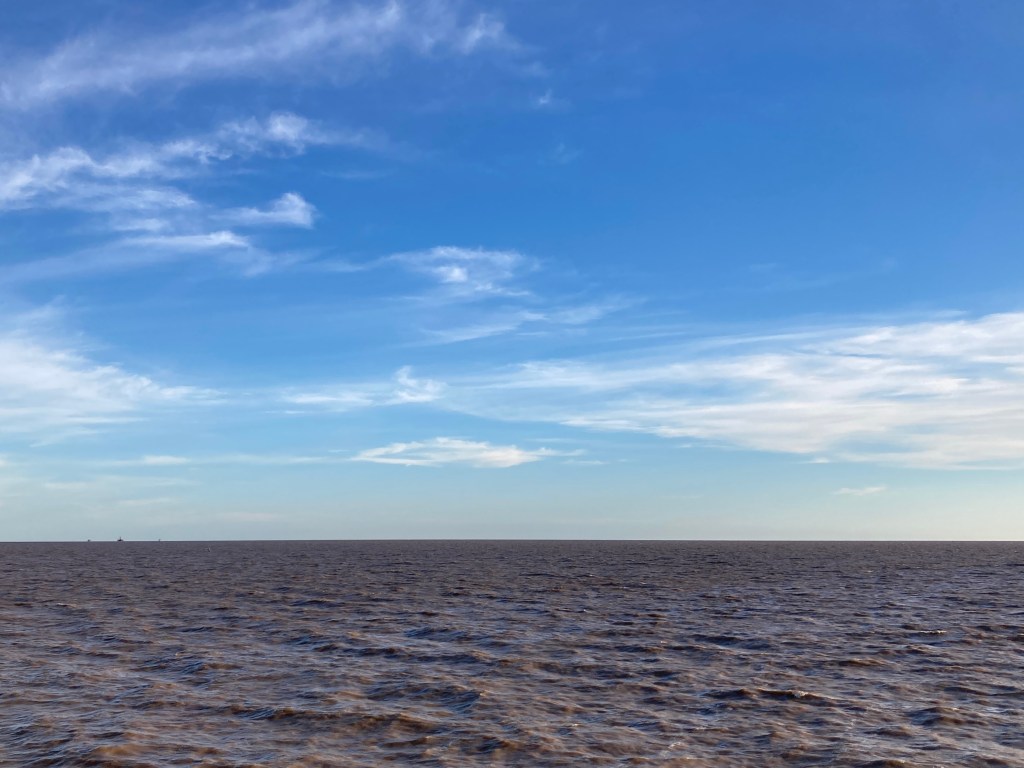
Leaving the city amid “the [La Plata] river’s humidity and the stifling Buenos Aires heat” (5), anxious because the army “kept a brutal watch over the highways” (6), they pass the tall buildings and then “the low houses and tin lean-tos of the shantytowns on the city’s outskirts,” until the trees of the countryside emerge. Elements of the climate, the local city and the landscape, such as the trees, flowers, and rivers, turn into symbols of the layers of violence concentrated there. Chatting in the car, Juan and Gaspar recount the story of Anahí, a Guaraní girl who lived in the forest by the Paraná River. After being killed by soldiers who wanted to appropriate Indigenous lands, she turned into the red flower of a ceibo tree. Originally a local tale of a girl killed by European conquerors, the story morphs into a recollection of the “many girls the military […] murdered” (48). Enríquez evokes the country’s brown rivers (a topos in Argentinian literature) that carry their bodies and memory: “thrown into rivers, their eyes eaten by fish, their feet tangled in vegetation: dead mermaids with bellies full of lead” (48). Their fate evokes the dictatorship’s practice of making those clandestinely kidnapped disappear by throwing them alive from a plane into the La Plata River, turning the river into a grave.
In the littoral landscapes between Buenos Aires and Misiones – two regions far apart but connected by the country’s brown waterways – European colonisation, state violence, and environmental extraction appear intertwined. As Juan and Gaspar finally reach the Iguazú Falls in Misiones, the sight prompts Juan to reflect on the brown of the rivers, a “product of incipient deforestation,” coloured by the deep red soil of the region, predicting that “in a decade or so the falls would be all red water.” (108-109)
Yet, rivers possess spiritual-mythological substance and serve as sites of rituals. In the “lush and fearsome” (108) area around the Falls, at the “swift-flowing river,” as they come near to the murmuring sound of the Garganta del Diablo, the Devil’s Throat, one of the Iguazú waterfalls, Gaspar is overcome by a profound anxiety of being thrown “to the monster.” Captured by the view of “the water so powerful it was white and hung in the air” (111), father and son experience a moment of bonding, despite the fear and violence that permeates social and familial relations, including theirs.
Argentina’s rivers, especially the La Plata, the Paraná, and the Iguazú, spread through the novel, depicted as natural scenery, polluted areas and, especially, as lieu de memoire of the remote and recent past. The presence of these rivers echoes the desaparecidos (the ‘disappeared’) – a term used for those who were illegally abducted by the dictatorship and never returned, nor was any official information about their destiny ever provided. When Juan and Gaspar finally scatter Rosario’s ashes in the La Plata River, their ritual is reminiscent of the Mothers of Plaza de Mayo, a human rights association formed in 1977 that challenged the dictatorship by denouncing their crimes2. Today, some of them request their ashes to be thrown into the La Plata River as a way of joining their loved ones.
Misiones

The fortune of the fictional Reyes-Bedfords originates in their participation in the Conquest of the Desert, a historical, late nineteenth century military campaign that resulted in the murder and mass displacement of the Indigenous peoples of the Pampas and Patagonia, providing European settlers with lands for farming. The fortune of the Reyes-Bedfords extends to the yerba plantations in Misiones in the country’s north, colonised by European settlers in the early twentieth century. There, the predominantly Indigenous, Guarani, plantation workers – pejoratively called the mensú – were historically kept in conditions of near-slavery. Later, thanks to Argentina’s last military dictatorship, the family managed to maintain their regime of exploitation by suppressing worker’s organisations and leftist militants, the guerrilleros (525). They used the basement of their mansion at Puerto Iguazú in Misiones as a “clandestine prison” (150) where they turned the “poor, forgotten people of the north” (130) into human sacrifices. Beside graphic descriptions of rituals and torture, Enríquez’s rendition of the area includes many references to violence, from the whips used by foremen on Guarani workers on the plantations of the Reyes-Bedfords to the mass assassination of trade unionists and guerrilleros.
Later in the novel, the Misiones landscape reappears as a site of excavation and mourning, as Olga Gallardo, a journalist, visits the area to report on Pozo de Zañartú, a fictional mass grave near the Reyes-Bedfords’ residence at Puerto Iguazú. The site in Gallardo’s reporting resembles Pozo de Vargas, a historical mass grave discovered in Tucumán Province: just like there, in the novel, relatives gather around the excavation site to follow the work of archaeologists and forensic anthropologists, waiting for information to surface. The Misiones forest around the pit remains as beautiful as it is hostile – a landscape harbouring death and suffering.
Enríquez mixes the conventions of various genres, including historical fiction, investigative journalism, and gothic fantasy in a powerful way that brings her ‘total novel’ close to the New Latin American Gothic,3 and allows the reader to capture instances of violence not so much as an intellectual observer but in the form of an emotional and physical experience.
Buenos Aires

Much of the novel’s storyline set in Buenos Aires revolves around the disappearance of Adela, a friend of Gaspar, during the early years of democracy. At the time, Gaspar and his father live in Parque Chacabuco, a neighbourhood presented in the novel in near cartographical detail, for the reader to see it “from above, flying over the blocks as if in a dream or a helicopter” (221). In the neighbouring streets live Gaspar’s friends, among them Adela, his cousin. Near their homes is an “abandoned house at 504 Villarreal, between Moreno and Ortiz de Rosas” (222–3), enveloped in an air of mystery and rumour.
Having repeatedly dreamed that her disappeared father was in the house, Adela is drawn to entering it. After Gaspar unblocks the door using his supernatural powers, they walk into a living room wallpapered with flowers and full of human remains neatly organised on shelves, then wander off into uncanny corridors filled with voices that suggest the presence of those taken by the “Darkness.” More than a house, the place is a living presence that changes its size and shape; a space with no end, a liminal space: once you enter, you are at the threshold to the “Other Side.”
While Gaspar and their friends are able to escape, Adela disappears behind a door and is never found again. Her unresolved death testifies to the pervasive power of disappearances, casting a dark shadow on Gaspar’s life, and connecting a series of enigmatic deaths within and without the family: the death of Adela’s father, Eduardo (the husband of Rosario’s cousin), buried, most probably, in the Misiones mass grave, Adela’s aunt, Rosario, and Olga Gallardo, the journalist whose investigation of the mass grave leads to Adela’s mother (and other relatives of the dictatorship’s victims) and ends in suicide. If the “Darkness” feeds from deep suffering and exploitation, Adela’s disappearance exposes the continued presence of something dark and threatening in our social world.
The persistence of violence in the novel reminded me of being a child during the dictatorship when fear was permanent. Violence was a common occurrence in everyday life, such as when the police asked people for documents by making an ostentatious use of arms and intimidation. On one of these occasions, when the dictatorship was nearly over, I was arrested and taken to a police station, even though I was a teenager. Being in love with an active youth political leader at the beginning of democracy, I needed to change my daily routines for several months when I started to receive death threats during an attempted coup d’état. But darkness was not only on the outside. It hid in intimate spaces, too. Parents can be beasts, like Gaspar´s and Rosario´s parents in Enríquez’s novel. Painful nightmares accompanied me for decades after I had managed to set myself free and leave my parents’ home. As shown in the novel, darkness feeds off cruelty and its effects remain as echoes of the other side.
Like Rosario in the novel, I became a social anthropologist and during the many years I studied and worked as a professor at the University of Buenos Aires, I used to take the subway at the Emilio Mitre subway station at Parque Chacabuco where Juan and his son Gaspar lived (and, unbeknown to me, Enríquez as well), a place surrounded by British-style houses. The scenes described in the novel occurred around the park, only some blocks away from the Philosophy and Letters Faculty where I used to work. Since I read Enríquez’s story of Adela’s disappearance, this location has transformed from a transit place with no significance to a place equally real and imaginary, one that best embodies the disappearance of people during dictatorship. Even though human rights violations are my field of academic expertise, no statistical data or objective account can compare to the impact of this breathtaking scene in the abandoned house.
Although Parque Chacabuco is called Castelli Park in the novel, those familiar with the city will find several indices that help identify it: the swimming pool, the rose garden, the church, the carousel, and even the international bilingual school nearby and the English neighbourhood by the park. The abandoned house itself, however, turned out impossible to find: none of these streets exist, no matter how real their names sound, as they refer to Argentinian history (Mariano Moreno and Ortiz de Rosas) or a place in Buenos Aires (Villa Real). Yet, not far from the park is a street called Zanartú – the name Enríquez gave to her fictional clandestine center in Misiones. Enríquez renders the city and the Argentinian landscape palpable and real, yet, she makes the reader feel lost in her descriptions.
As I was following Virginia’s search for the abandoned house on a map of Buenos Aires from the other side of the ocean, my impression was that the fact that the site cannot be located precisely contributed to the feeling that the past is somehow haunting the city. I recalled my experience while living in Buenos Aires and going for a walk in San Telmo, the neighbourhood where I stayed, on a Sunday afternoon. Behind a pretty, Bauhaus-style apartment complex (so reminiscent of my native neighbourhood in Budapest) on Avenida San Juan I ran into what is today a memorial site for a former clandestine detention center called El Club Atlético. Thinking about the “abandoned house” in Enríquez’s novel I remembered how some of these centres were located in the midst of the city’s residential neighbourhoods, near spaces of everyday life: inside a bus terminal (El Olimpo), in a car repair shop (Automotores Orletti), in the basement of a police station (El Club Atlético), in residential buildings (Pozo de Quilmes), at the production plants of collaborationist companies (the Ford Motor Argentina Plant), and so on. To render the historical experience of violence during the dictatorship, Enríquez applied the gothic genre that typically places the terror of the unimaginable inside the familiar – such as our homes and our bodies. The abandoned house is such a potent metaphor for clandestine detention centres because they both set the horror amid our familiar spaces (our homes, our neighbourhoods, our streets) and ordinary activities.
London
Born in Misiones into a poor family of European immigrants, Juan’s entry into the Reyes-Bedford family recalls the long-standing practice of domestic child labour. Yet, he is the last in a long lineage of mediums “recruited” by the Order. He succeeded Olanna, a priestess from the Kingdom of Nri, a medium “discovered” by the Order thanks to their ties to the National African Company (later Royal Niger Company) that ruled Colonial Nigeria. Taken to London and subjected to brutal rituals to conjure the “Darkness,” Olanna is sacrificed at the Order’s headquarters in St John’s Wood. Through the lineage that connects Juan to Olanna, London is fully integrated into a transnational space rooted in exploitation and human suffering: “We are servants to these people,” says Juan, “we are the flesh that they torture” (458).
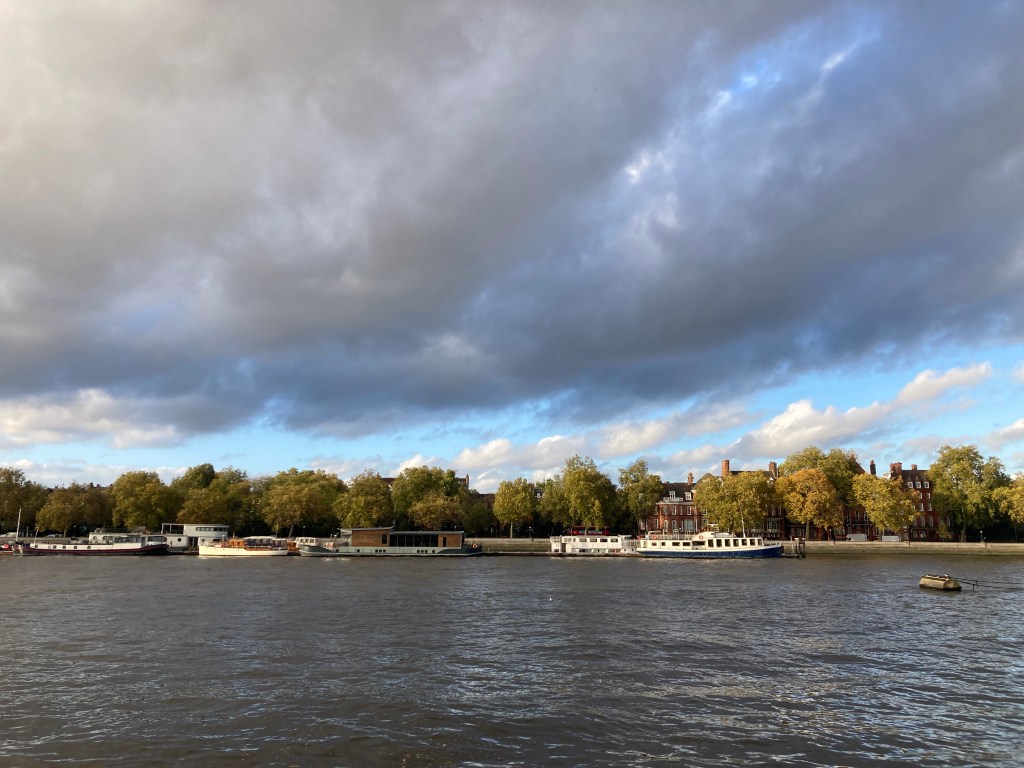
Back from my walk in Chelsea, I was thinking about the three houses in the novel which opened to the “Other Side” in London, Buenos Aires, and Misiones. I understood Enríquez’s description of the “house in Chelsea” as a metaphor: in a city that hides its past of imperial violence behind charming Georgian and Victorian facades, she opens a door to a realm of the dead. Yet, I needed data to really see the city she alluded to. Searching the internet, I came across a map created at UCL’s Centre for the Study of the Legacies of British Slavery: on my screen, I could now retrace my walk from Sloane Square to the Thames, and see the addresses I had walked by, some of which once belonged to slave-owners or direct beneficiaries. Sir Hans Sloane was one of them. A substantial part of his wealth came from his wife Elizabeth Langley Rose, heiress to sugar plantations in Jamaica, which, alongside his own investments into slave trade, into enabled him to buy the land on which, in 1771, Sloane Square was built. UCL’s map showed some twelve hundred houses within London’s perimeters – in each, I imagined, there’s a door to the “Other Side.”
All this made me think again of my native Budapest. There, in 1944 local authorities established a ‘dispersed ghetto,’ a system of some 2000 yellow star houses in which Jewish residents were concentrated before they were transferred to two ghettos, still inside the city. The neighbourhood in which I grew up was one of these ghettos, and the house in which we lived stood at the bank of the Danube, with my balcony overlooking a section of the river where Jews were shot into the water. In front of our building, a small memorial commemorated those victims. Around the corner, there was a house in which my grandparents were hiding at one point in 1944. Growing up, I learnt to understand how fear can persist decades after experiences of persecution and resurface in everyday life. As I was thinking about Enríquez’s novel, Argentina’s brown rivers, the clandestine detention centres in Buenos Aires, their proximity to scenes of everyday life, and the slave owners’s houses in London, these memories kept coming back.
Researching, travelling, reading, and writing in tandem wove a web of connections to places and stories that now crisscross the geographies in which our research unfolds. As we return to our project and set out to analyse fieldwork data, we will work in a context that has changed with each and every connection we made, and we wonder how the words we recorded might resonate in it.
Zoltán Kékesi’s and Virginia Vecchioli’s research was generously supported by CALAS/Maria Sibylla Merian Center for Advanced Latin American Studies in the Humanities and Social Sciences as well as the Pears Foundation.
ZOLTÁN KÉKESI is a historian and a research fellow at the Centre for Collective Violence, Holocaust and Genocide Studies at the UCL Institute of Advanced Studies.
VIRGINIA VECCHIOLI is a social anthropologist and full-time professor at the Federal University of Santa Maria, Brazil.
***
Edited by MARTHE LISSON
Proofreading by ALICE-ANNE PSALTIS
All photographs by Zoltán Kékesi and Virginia Vecchioli
Categories