A Delhi Hip-Hop Odyssey

NOTES FROM THE FIELD
A Delhi Hip-Hop Odyssey.
Collisions of Home and Field
by Sarojini Sapru
23 January 2025
What does it mean if your fieldwork takes place in the comfort of your hometown and to work on a subject like music? You are in a place that is filled with personal memories and people you know, working on a subject that transcends all boundaries and is oblivious to ‘professional’ and ‘private’ spheres. How, then, do you keep a balance, separate work and personal life? Sarojini Sapru reflects on these questions and shares her experience as she returned to her native Delhi to study its hip-hop scene.
It’s a strange feeling to be going home for fieldwork. This past year, I returned to Delhi – it’s where I spent most of my childhood, worked my first job, and lived in my first grown-up apartment. It’s also the city where my mother lives. I returned to conduct ethnographic fieldwork on hip hop scenes and spent nine months hanging out with artists, managers, fans, and content creators. It was new and exciting because I hadn’t been part of this world before my research. But parts of it were also familiar, some commutes and rhythms mundanely so.
My doctoral project looks at the intersections between hip-hop, gender, and urban space. I explore questions of youth aspiration, digital media, virality, and fandoms. I began this research after witnessing the youth cultures that emerged around the Shaheen Bagh protests in 2020 – protests against a discriminatory new anti-Muslim citizenship law. At that time, hip-hop was the soundtrack of the protest movement. Young people performed radical, left-wing hip hop at protest sites and started to release their music online.
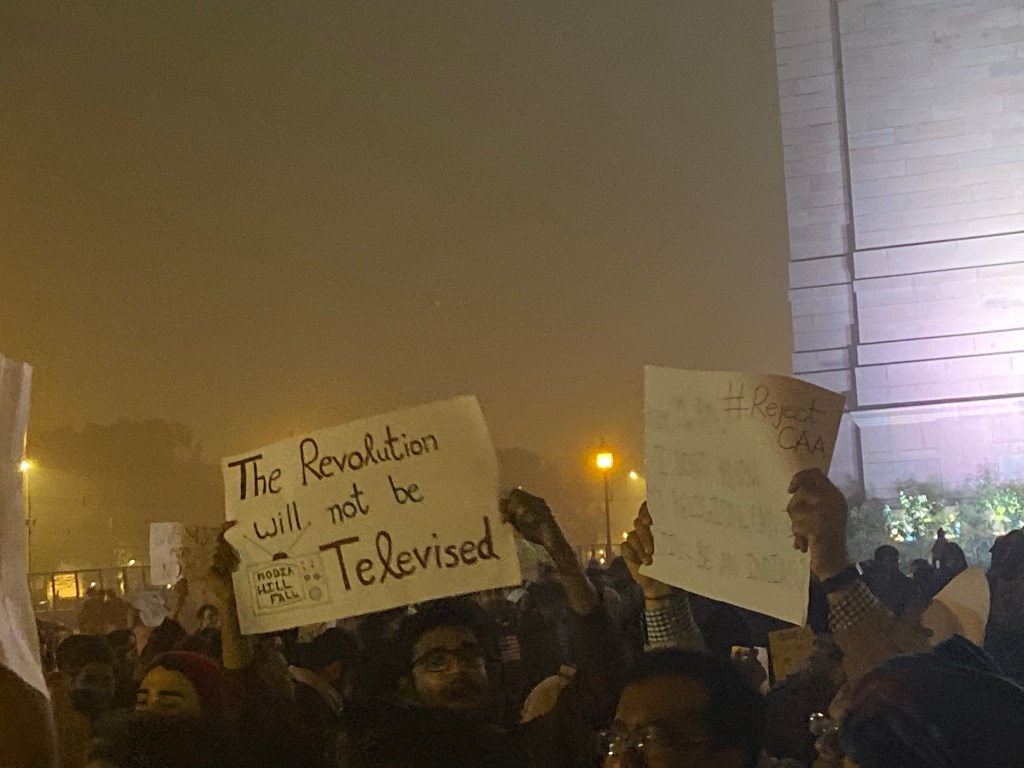

Four years later, hip-hop in Delhi has transformed beyond progressive politics – and spans a range of ideologies and topics. Delhi hip-hop artists release music commercially on streaming platforms, collaborate across genres, and even, occasionally, perform internationally. It is in this tangle of underground and commercial, local and global, that I situate my research.
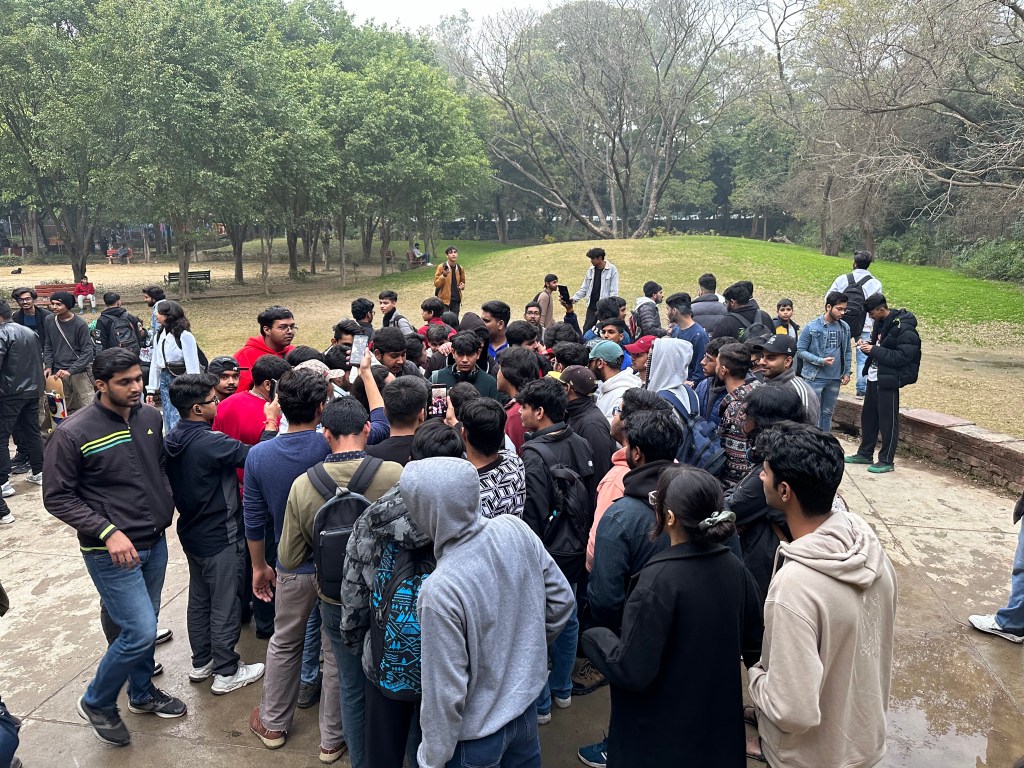
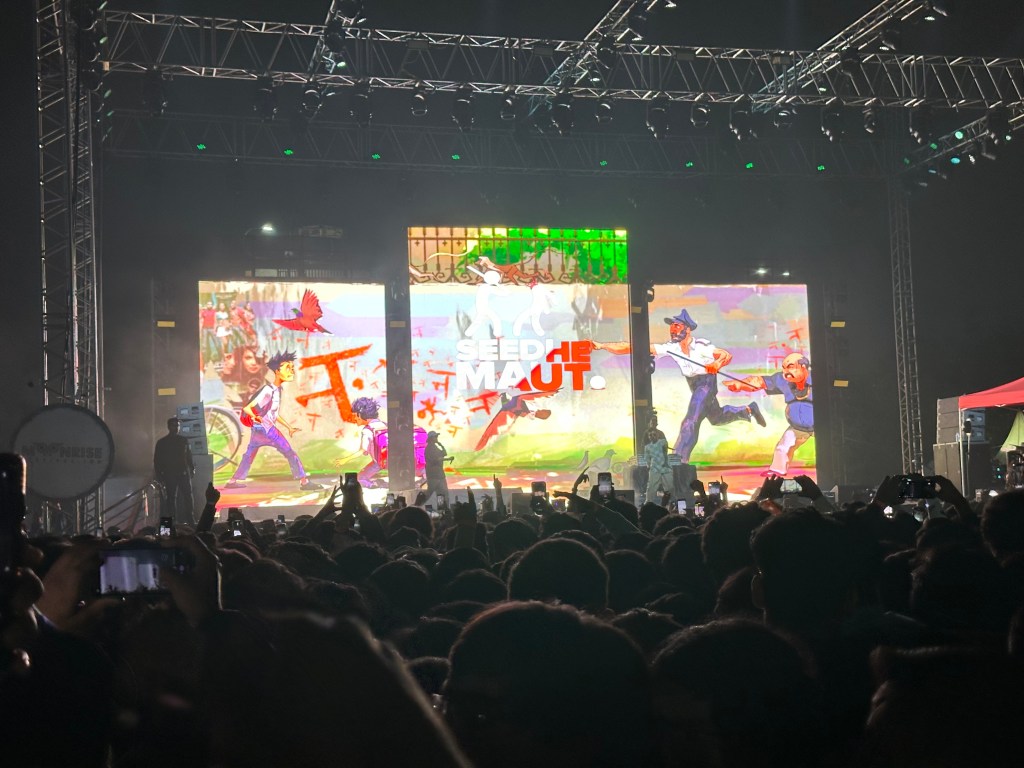
To be home for fieldwork and to be in the field when I was home was a blurry experience. I was unable to compartmentalise my separate lives and often found that when I was at cafes or other public spaces with my interlocutors, we were interrupted by an old friend or social acquaintance. Sometimes, when I was out with my old friends, I was interrupted by my new interlocutors. Some of these interruptions were more deliberate than others. Hip-hop is a social activity – gigs are attended by groups of people. That’s the whole point of it. I would take friends with me to gigs and we would end up chatting with artists and other people involved in music production. The social spaces that my interlocutors and I occupied were not distinct from one another.


On occasion, I even took my mother to gigs. On 7 March, Delhi’s first queer hip-hop artist Kinari played at Nehru Place Social, a popular music venue located not too far from my home. The gig was to launch her album Kattar Kinnar; it is raw, radical, and sexually provocative. Mithran, Kinari’s manager, said later of my mother, “She’s such an icon, bring her to all of Kinari’s gigs, please”. As my interlocutors share their life-worlds with me, it is important that I do the same.
Returning to Delhi, I was unable to separate my research self and personal self into divided sites of home and field. Perhaps this is something that many ethnographers realise in theory, but in practice and published writings it remains the norm to construct emotional, temporal, and spatial boundaries between personal and work selves – a here and a there, a home and a field. But home and field are unstable categories that are designated by research conventions, the academy, and particular moments in each of our lives. Right now, I have two or three homes across different continents. Moving between the ever-changing homes, fields, and social relations meant navigating social spaces of dislocation, relocation, and, ultimately, location.
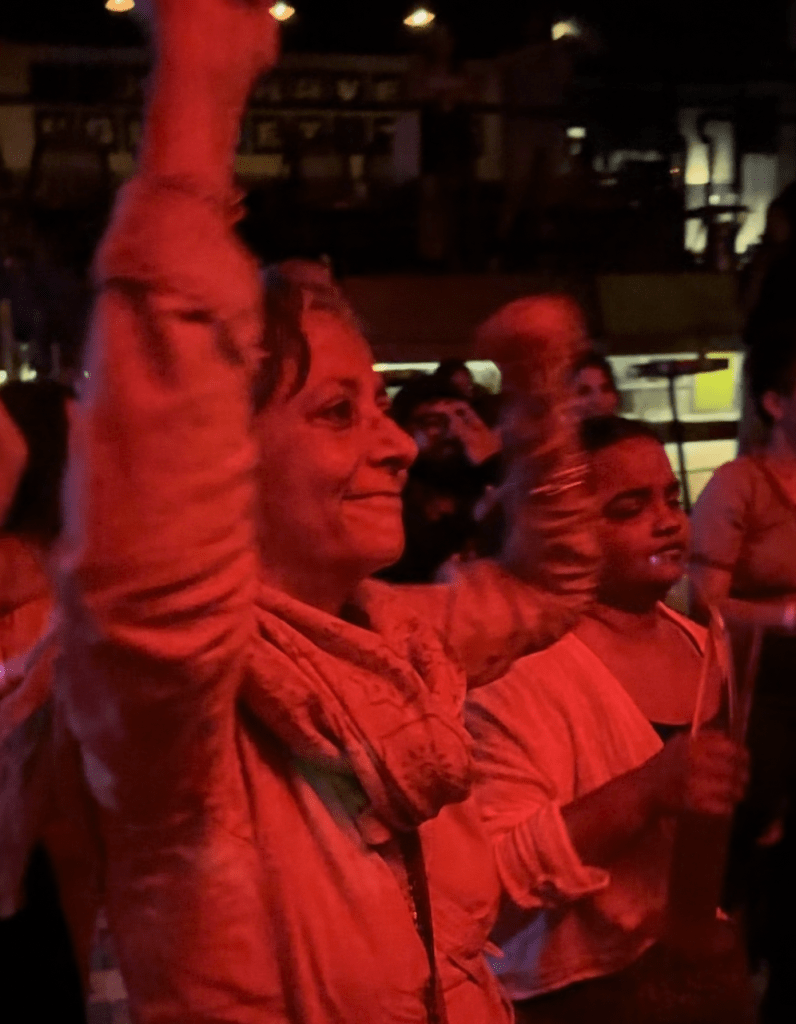

Some of my research was at clubs and music venues – but gendered geographies of the city cannot only be explored in public spaces. At my second meeting with hip-hop fan, Jahnavi, she invited me to her home to see the fan art that she created. And as we hung out, talked, and ate momos that we had ordered online, I paused and was struck by the fact that we were in her bedroom. Jahnavi is a few years younger than me – twenty-four in the image below – and I was reminded of the time when I was in high school and much of my social interactions with friends took place at one of our homes, caught firmly within the narratives of gender and unsafe cities. There is something deeply personal about being invited into someone’s home, particularly their bedroom. It is an act of friendship. I was struck by the familiarity of my meeting with Jahnavi – hanging out in a bedroom with a female friend and talking about music, fandoms.

I have now returned from the field, and yet the relationships and intimacies that I forged with hip hop practitioners in India haven’t disappeared – they are not compartmentalised to a part of my life with which I no longer engage. Take my interlocutor-turned-friend Mithran, Kinari’s manager. He was applying to UCL when I first met him, and he is now pursuing a master’s degree at UCL East. We often meet up on Thursdays to co-work and hang out. When field and home collide, leaving the field is never a proper departure – if you will, never a neat stage exit.

SAROJINI SAPRU is a final year PhD candidate at UCL Geography, funded by the ESRC. Her doctoral project is grounded in ethnographic methods, and she collaborates with young people who are part of Delhi’s hip-hop scenes to ask questions around fandoms, virality, aspiration, and mobility.
***
Edited by MARTHE LISSON
Proofreading by MARGARET COMER
All images: Sarojini Sapru
Categories