

SERIES: WAYS OF WASTE
Take a Stand!
Oliver Franklin-Wallis’s Wasteland
by Tomasz Jablonski
14 March 2024
To celebrate the launch of the IAS publication Wastiary, Think Pieces is publishing a range of contributions that are inspired by the subject of waste. For this book review, UCL Anthropologist Tomasz Jablonski read Wasteland by Oliver Franklin-Wallis.
Human waste and its disposal is one of the most pressing issues of our times and intrinsically linked to the climate crisis. In his latest book, journalist Franklin-Wallis journeys through the global waste industry, introducing readers to the people who work to make a change and revealing the many shortcomings of waste management. But does he do justice to this critical topic? Tomasz Jablonski is unconvinced.
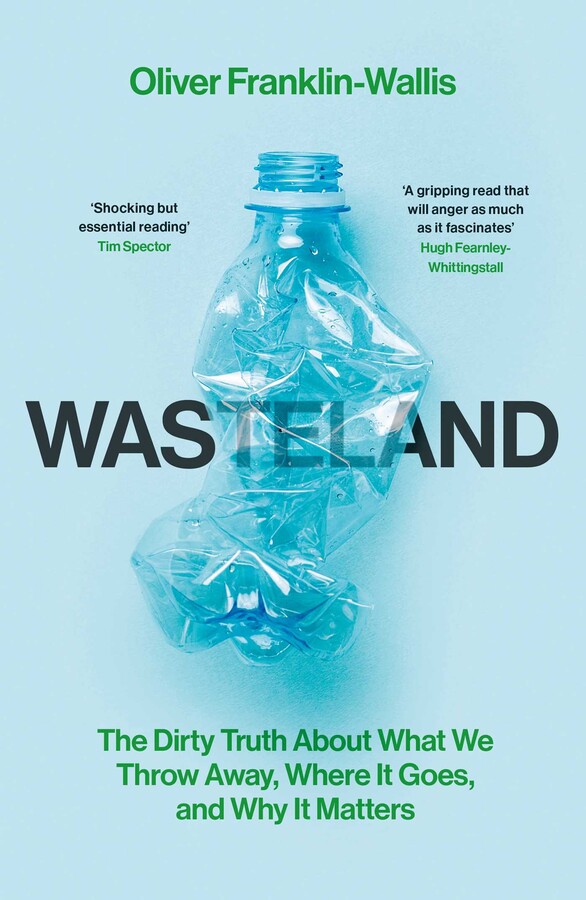
Oliver Franklin-Wallis’s book Wasteland: The Dirty Truth About What We Throw Away, Where It Goes and Why It Matters , takes readers on a journey through human waste. In a journalistic investigation, the author embarks to describe various types of waste and systems that deal with it, from sewage to nuclear waste. At the centre of this story are humans and their preoccupation with and – as the climate catastrophe is underway – their responsibility to dispose of unwanted matter. Franklin-Wallis convincingly presents human relations with waste not as a novel predicament but as a chronic condition of human life. Waste disposal has been relevant throughout the history of humankind. However, as the author claims, the magnitude of the problem and the consequences that inadequate waste management produces are significantly different from the past. He does a great job of meticulously describing the waste management processes in various parts of the world, contextualising them within the local and global histories. He provides a detailed analysis of the data about the waste produced globally, how it is influenced by consumerism and colonialism, and global economic inequalities. Franklin-Wallis advances the argument that the contemporary story of waste should not be seen as a separate issue but rather as another strand of the greater event: the climate catastrophe. However, this argument is not sufficiently developed in the book. Very often, the author shies away from critiquing the wider economic and social arrangement that is at the root of climate change and seems to present examples of waste mismanagement as existing outside of this context. This lack of adequate critique and a missing link to the wider climate change context is one of the biggest shortcomings of the book that undermines its merits.

At the time of writing this review, the COP28, where governments met with an agenda to find solutions to the problems of climate change, was shrouded in yet another scandal. It was revealed that the UAE, hosts to the conference, used it to secure and push oil and gas deals. Furthermore, certain nations’ leaders and major political figures, such as Donald Trump, Rishi Sunak, or newly-elected Argentinian president Javier Milei, either shy away from a commitment to tackle the issue or completely negate and downplay its importance. Therefore, it should be imperative that any effort (and for that, academic and journalistic work) aiming to resolve the climate catastrophe makes a decisive political stand, which includes pointing fingers, accepting thorough criticism, and offering available alternatives. However, Franklin-Wallis either abstains from or hides his political stance, and consequently, the analysis of what he has gathered on his journey is insufficient. The limitations and failures of waste management systems across the world are presented as just factual descriptions of the reality we live in without making a vital step to critically evaluate why. In this regard, the book lacks an urgent call for radical change in how we approach waste and the whole production process. The author is also inconsistent on the blame and guilt that he personally feels throughout the book and wrongly extrapolates onto the whole of humanity.
In comparison to international industries or governments, there is little in power and means that common folk can do to prevent mass-scale pollution of the planet, especially if we consider the intersecting web of inequalities and privileges, whether economical, geographical or others. The problem requires the international co-operation of those with the most means and power; hence, we should turn a critical eye on the politicians, governments and industries to demand appropriate actions now. Nevertheless, I believe that the personal relationships with waste and stuff that we have, produce and throw away can be a good starting point for a change in how we approach this problem.
Wasteland offers a very personal history of the encounter with waste in its various forms. Franklin-Wallis blends the detailed and thorough descriptions of waste and how we handle it with his personal perspective. For instance, the eloquent and intricate passages from inside the recycling facility are followed by depictions of the author’s private life. He describes an exhaustive washing of the jars over the kitchen sink, separating plastic cups from the bottles and placing them in the correct bins. These personal stories that trail after each item allow the reader to undo the harm of consumerism, in which objects are seen in a vacuum, appearing from thin air on shop shelves and disappearing without a trail in the bins, even though they accompany us in our daily life, and we can have a deeply personal relationship with them. Focusing on each item’s trail is a powerful tool for everyone to pick up on in their own life and to re-create the intimacy with the stuff that we use, transform, or eventually throw away. Doing so also encourages us to focus our attention on the end life of things and what happens to them after our final farewell. Franklin-Wallis not only opens the door to the hidden realm of waste and showcases its problems but also the passion and brilliance of the people who work to resolve or prevent the harm that modern consumer-capitalist waste creates. However, the de-coupling of stuff, the environment, and people that characterises capitalist societies is not a universal human trait. In fact, an abundance of anthropologic evidence suggests it is quite a novel phenomenon. Yet, it already has unprecedented consequences for our lives and environment that governments and large corporations seem to overlook or discredit. On an individual level, shifting our focus back onto the context in which stuff is made, used, and disposed of helps us to understand the real consequences of a consumerist lifestyle and capitalist production.
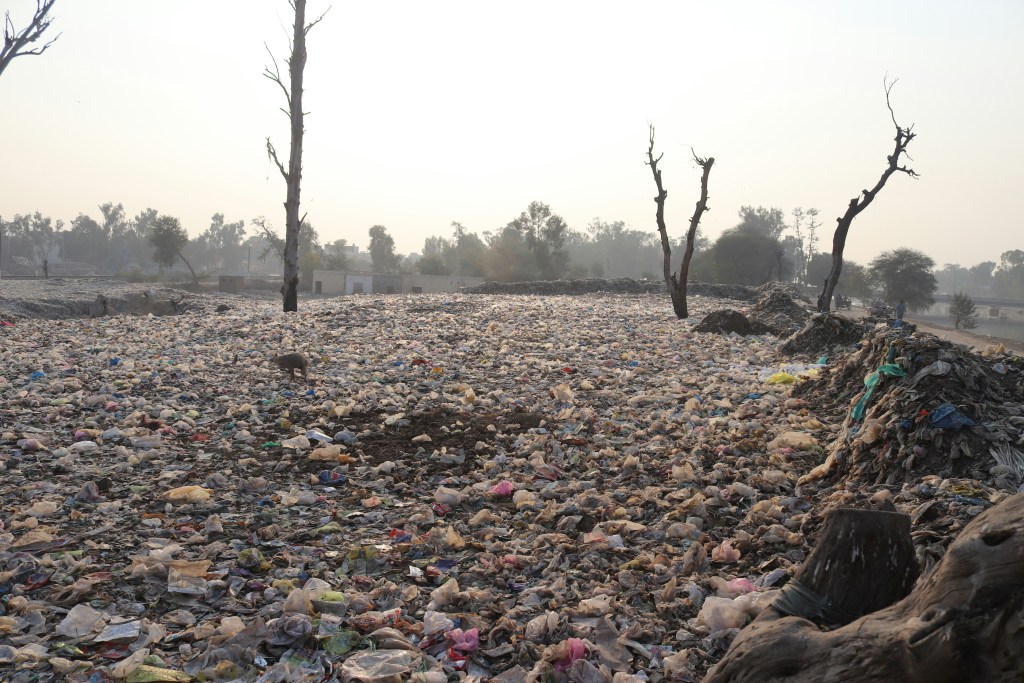
Franklin-Wallis offers a compelling critique of greenwashing which the biggest polluters (large multinational corporations) indulge in. He also demonstrates how most governments are often too slow to prevent damage or disregard viable solutions due to a lack of funds or simplified cost analysis, where environmental consequences are underestimated or ignored. He justly points out how little the public knows of the actual and long-term damage that contemporary waste produces and accurately breaks down our distinctions of waste, namely, industrial and non-industrial waste. The author shows how such division obscures the reality that all waste has permanent consequences on the environment and thus should be treated transparently with the same determination and focus. However, detecting the author’s criticism requires some effort. The reader must look for it as it is often hidden between other descriptions or relegated to a few paragraphs in the chapters. The book lacks a clear overarching argument against the economic and political system in which waste is created. Consequently, it appears that the problem lies at the end of the production cycle; in the landfills, recycling centres, and incarcerators, and in how we buy, why we buy, and what we dispose of. Meanwhile, the real problem is at the very beginning, when decisions are made about how and why things are produced. The answer to it lies within the current economic system and how it perverts all aspects of our lives and destroys the planet. Franklin-Wallis points out how, for example, large fashion brands are dumping tons of old unsold products as it is financially more profitable than releasing them on the market after the arrival of new models. Such practice is justified by arguing that it would otherwise effectively reduce the price of new products, thus lowering the profits. On his journeys through recycling, he describes how “recyclers are normally doing things the most financially efficient way; this doesn’t mean the most environmental way”. Climate change is rooted in capitalism, and in the same way that it has created and/or accelerated it, capitalism will inevitably hinder humanity’s efforts to fix it.

Nonetheless, Franklin-Wallis’s book deserves credit. He argues for the need for a circular economy, where waste ceases to be ‘wasted’. He describes how the waste problem is inextricably linked with capitalism and colonialism which incentivise to over-produce, sell useless products, and outsource the consequences on the poor, marginalised, usually outside of the Western world by shipping out dangerous waste to the countries in Global South, or storing toxic waste on the territories of Indigenous communities in Northern America. However, the book would make a more compelling argument if it more clearly critiqued the economic system we live in and pointed at those who are primarily responsible for the destruction of our environment. That is, the lying corporations and governments that are keener on invading countries to force a political change rather than cleaning up toxic industrial waste from the lands of Indigenous communities they colonised. Frankin-Wallis meticulously describes the problems in our approach to waste and where it is comes from. But he abstains from making the last step by not linking it with political ideas and people who direct how we handle the climate crisis. The absence of such a link has real and far-reaching implications, as it normalises the current situation. The book implies that these consequences are typical for all human existence and that it is acceptable for those who endeavour to fix our climate, environment, and, in this case, waste to be profit-driven. In my view, making a profit is not and should not be the sole direction we can take in the future.
In addition, I find the frequent reference to the Anthropocene confusing. The book proposes that the climate catastrophe is our (all humans’) responsibility and fault. It is true that all humans are facing climate change. However, not all of us are equally responsible for it because not all of us are CEOs of fast fashion brands, oil companies, or head of states with the immediate power to change laws. Thus, the scope of responsibility and impact differ significantly for different people. Furthermore, an ever-increasing number of people, namely the younger generations, did not create the problem, but will experience its effects. We live with a climate catastrophe whose middle name is capitalism. This is not to say that we, and authors writing on its various effects and issues, should not focus on fixing the problems it has created by trying to find solutions within the system. However, we will not avoid the climate catastrophe if we don’t change the economic and political system itself. If we don’t it will always be a plaster on a wound rather than an effective treatment.
“When I first started my journey into the waste business, my initial feeling was not one of outrage, but of guilt”, Franklin-Wallis writes. Guilt resurges in the book a few times. However, coupling ‘guilt’ and ‘Anthropocene’ is profoundly dangerous because it projects guilt onto all humans. Shared guilt is often weaponised within the climate crisis discourse. It reorients our attention to the past or the grievous possibility of the future, taking us away from the here and now, where climate catastrophes happen frequently and we could make an immediate impact. If fixing your broken furniture instead of buying a new one, re-using clothes, or even painstakingly washing jars for recycling is done from a place of guilt, it becomes a reactive act that is preoccupied with alleviating that guilt and might lead us to believe that we should be less demanding of the governments and large polluters. Conversely, if we do such things from a genuine place of care for the environment and all the life that shares it with us, it can bring us closer to a genuine connection with life and the environment and motivate us to demand a more profound change.
Therefore, any climate-related work has a substantial political weight that should not be disregarded. The time to act, demand, challenge, and focus on alternative systems is precisely now. Franklin-Wallis tried to convey hope, pointing out that things are changing. He discusses advances in the last decades regarding waste and protecting the environment from hazards. He also mentions the acts of political will in drafting and signing accords reducing the most dangerous waste production as well as the governmental funds established to help clean up the toxic leftovers of the industrial economy. Above all, he showcases the will and commitment of ordinary people to change our relationship with waste, reuse, and adequately dispose of it. For example, the innovations that help to counteract consumer capitalism like zero-waste shops or apps like Vinted, where one can buy and give a second life to various items. However, if we do not challenge the system that got us into this mess in the first place, eventually, we will accept that little can be done, and it is good enough. Wasteland is a piece of good journalistic work and a brilliantly written book, but I frankly cannot accept it as good enough.
Oliver Franklin Wallis’s Wasteland: The Dirty Truth About What We Throw Away, Where It Goes, and Why It Matters was published in June 2023 by Simon & Schuster.
TOMASZ JABLONSKI is a master’s research student in Anthropology at UCL. He specialises in environmental and economic Anthropology and is researching community response and the social impact and political implications of ecological disasters in western Poland.
***
Edited by RASA KAMARAUSKAITE
Proofreading by ANNA STELLE
Standfirst by NICHOLAS LACKENBY
Lead Image: © Muhammad Numan via Unsplash
Categories